
Feature: Racing Through Life - Part 1
Creative Hearts feature series

After much consideration, David and Mari are replacing the regular newsletter with a new feature they will write both separately and occasionally together.
Subscribers will receive a minimum of one of our latest works each week. We hope you like the change and feel free to leave a comment with your thoughts!
David: This is the first in a multi-part series of personal essays.
When I began writing this series, I didn’t know what to expect. I didn’t even know where I was going or what I wanted to say. I’ve tried navigating my way through overwhelming, scattered thoughts, powerful memories, and personal realizations.
The series backdrop is auto racing. However, it’s more than that. It's about personal reflection, processing overdue grief, reclaiming beautiful childhood memories, and family reconciliation.
In writing Racing Through Life, I've discovered racing is my life’s consistent through-line. I’ve always been racing—the impatient and desperate kind. It’s time to slow down, heed the frantic caution flag currently waving in life, and continue my plodding journey of recovery.
This series is dedicated to my late brothers, Donnie, Chuck, and Rick.
PART ONE - IN THE BEGINNING
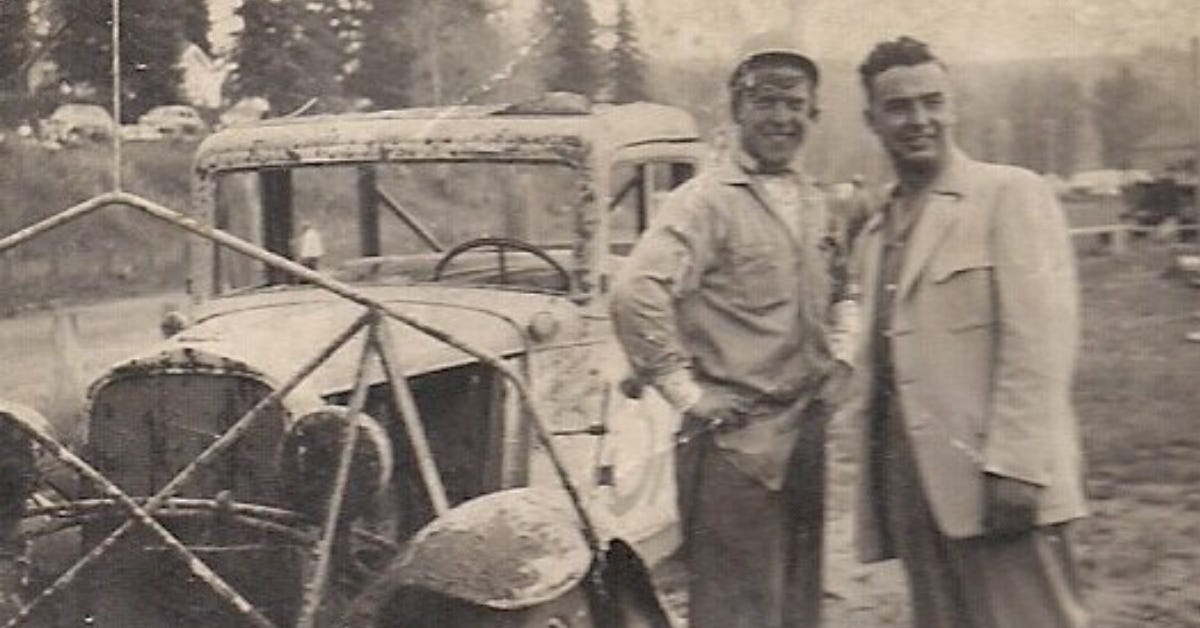
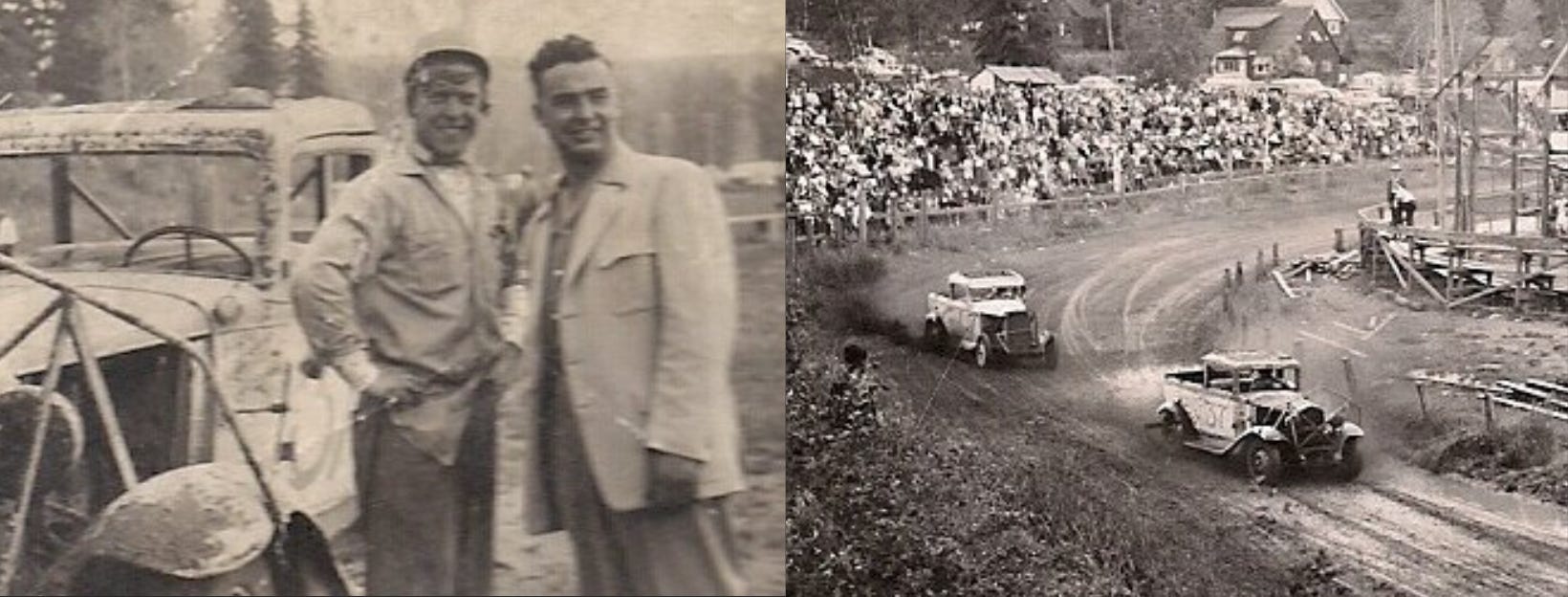
Discovered in a box of old pictures after he passed away, a batch of early 50s photos of dad taken in Quesnel, BC, represents my family’s roots in auto racing. While my dad may have only raced a few times in these sporadic jalopy races during special community celebrations, he had an integral part in Quesnel’s racing history.
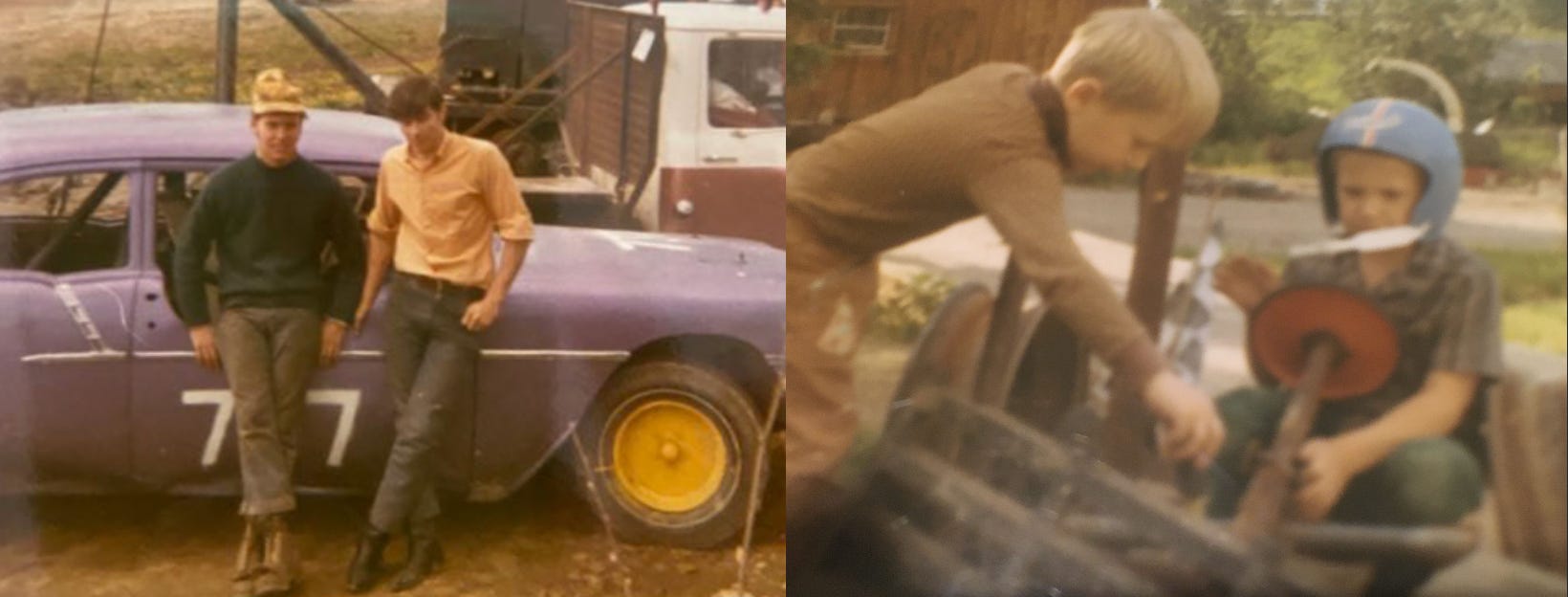
My older brothers, Don Jr., Chuck, Rick, and later, myself, raced at various levels for several years. Most notably, Don Jr. (Donnie) later took part in Calgary’s Super Stock Series before joining CASCAR, racing all over Western Canada.
I smile, looking through these original photos, because I have very few photos of dad from before I was born. Also, they remind me of the family passion for racing I grew up immersed in. In remembering the innocent, exciting days watching my older brothers race, I once again bring to life a childhood I long to reconcile.
If I try hard enough, I can take myself there.
OFF TO THE RACES
Open hay fields, wildflowers, birch trees, tractors, summer dust, old barns, cows, horses, dandelions, junk, rundown buildings, and racecars. Our family farm, spanning much of Dragon Lake's vast westside, provided endless opportunities for imaginative childhood adventures. I depended on my admittedly wild imagination and imaginary companions for entertainment.
I had to.
Born nine years after my nearest sibling, Rick, I learned to be alone.
As I watched my older siblings get married, start families, and engage in exciting adult lives, I felt behind. In my constant quest to belong, the imaginary scenarios I created for myself were often based on their lives, activities, and careers. I couldn't wait to grow up and be like my brothers.
I idolized them.
Dreams were hatched and in my solitary play of boyish make-believe, I emulated my older brothers... especially when they raced.
I wanted to race, too. In my mind I could.
While my brothers prepared and raced their real racecars, I depended on my considerable imagination. The farm offered an endless supply of broken equipment and junk piles from which I could repurpose to build my own. My biggest challenge was convincing my less creative cousins and friends to enter my faux racing reality.
There's a belief as children we learn by what we see. Maybe it’s true.
As an observant child in the 70s, I learned by watching and going off to weekend races out of town, which allowed me to learn a lot. I learned about racing, cars, and my father, who was working long hours at the time and struggling to build his logging business, which provided jobs for our large family.
It’s funny what we remember as we age. Specific rips to certain weekend races, though there were many, one in particular sticks with me.
I remember the back seat of Mother's blue and white Chevy station wagon. While Dad drove, Mom kept nervous watch of the winding highway ahead, and I was excited and happy as I stood with my arms resting on the front bench seat. My dad, an ever present King-size Rothman cigarette burning between his nicotine-stained fingers, entertained me with endless stories, inappropriate jokes, and short songs from his merchant navy days. These weekend road trips to stockcar races gave me what I longed for most... precious, uninterrupted time with my father.
I also enjoyed the light, joyful mood.
Dad loved driving and enjoyed the time away from his growing logging company. He worked long, hard hours during the week, and I rarely saw him. These short road trips to the races in Prince George or Williams Lake were happy, stress-free moments I remember fondly. Little did I know, fishing trips together in the twilight of his life—me driving as he retold the same stories and jokes — became our thing, a treasured part of our eventual wonderful relationship.
As we wound our way on Highway 97 to Prince George, I settled back in the seat and wondered how the races would go. My brother Donnie and his friend Wayne had worked through the night trying to get a new motor running in his car. With an upgrade in horsepower from the 283 he’d been running, the 350 would give him a better chance to compete with the top Superstocks.
Maybe tonight would be the night for a long-awaited main event win.
The scenery flew by the backseat windows and I listened to Dad sing his regular driving song and dreamed.
“Roll along little Chevy, roll along
On the highway number two
That goes through the Cariboo
Roll along little Chevy, roll along”
YELLOW FLAG
In January of this year, my life seemed to be finally rolling along, too.
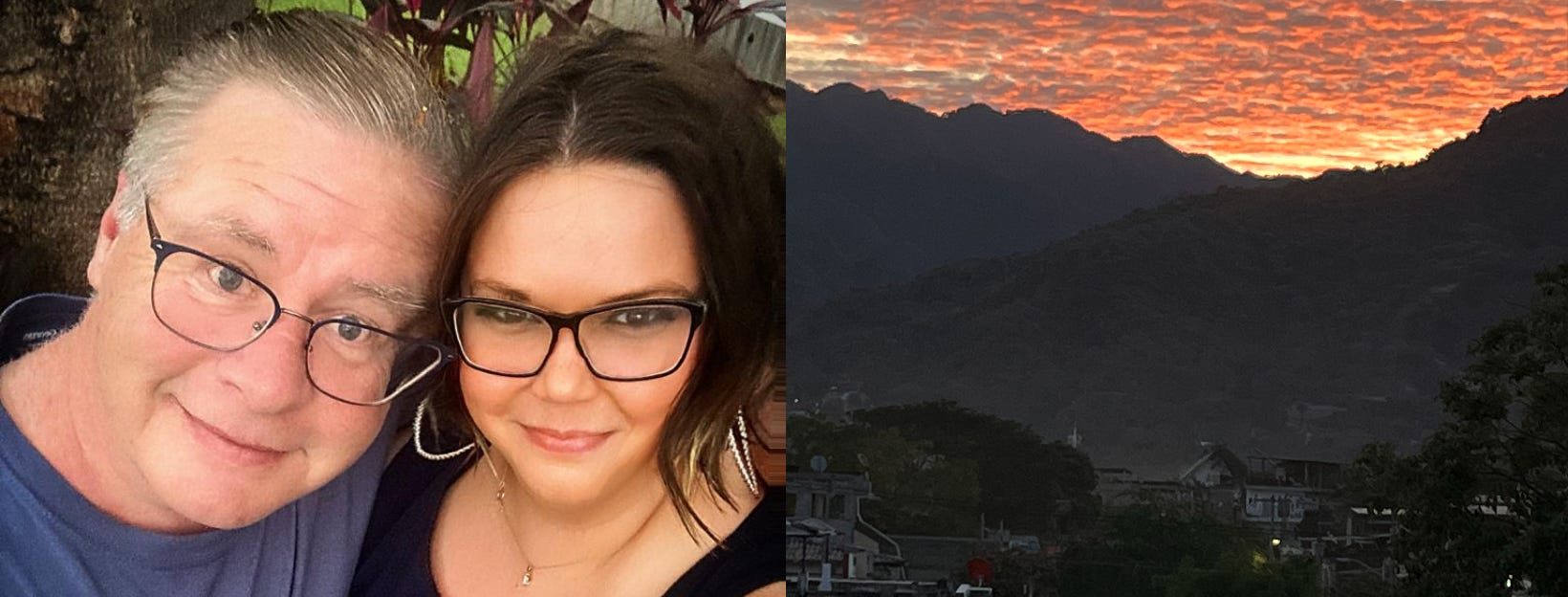
Mari and I, a month into our long-awaited stay in Puerto Vallarta, began another beautiful, peaceful January day. While she listened to her daily podcast on faith, I sat in quiet reflection on the studio apartment's outside deck, watching our authentic Mexican neighborhood come to life. I felt relaxed, comfortable, and at genuine peace.
I understood why. My often chaotic life had slowed.
Since arriving in December, I was experiencing daily significant personal change, welcome healing, and meaningful recovery. I realized what a race my life had been. The constant desperation to reach some unattainable finish line I’d manifested early in life seemed so obvious now.
Maybe it was the geographical change. Perhaps the complete anonymity allowed me to be present. Possibly, I was just ready to face my difficult past, reconcile strained family relationships, and simply accept my life as it was.
It seemed the new year brought with it new hope, comforting love, and endless opportunity.
An unexpected early morning call from my sister, Marilyn, changed things as she informed me our brother Chuck had passed away. It began a tough period. Within a few short months, our brother Donnie also passed. Chuck and Donnie, along with my late brother, Rick, played significant roles in my growing up. In the span of a few months they were gone.
I loved and admired them as younger brothers do, but I drifted away. Deep regret rested heavy on my shoulders.
When Mari wrote about her younger sister, Lauren, who sadly passed away last June, I was inspired by her tremendous courage. Her moving, beautifully written haiku and personal essay, Broken Hearts of Unbreakable Sisters, was an emotional and difficult journey.
To write this has been difficult, too. However, I surprised my impatient self with a strange willingness to slow down. In doing so, I realize my readiness to both write and continue healing old wounds.
It’s been a special experience.
GREEN FLAG
Back in the 70s, races in Prince George were special, too.
Old PGARA speedway, a paved short oval of tight high-banked corners, narrow straightaways, and night lights. Unique in the 1970s Tri-City race series, races were fast, fostered closer competition, and the grandstands put spectators close to the action. The loudness and potent smell of burning fuel and rubber created a more visceral experience than tracks in Quesnel and Williams Lake. While each venue had special qualities, Prince George just felt different.
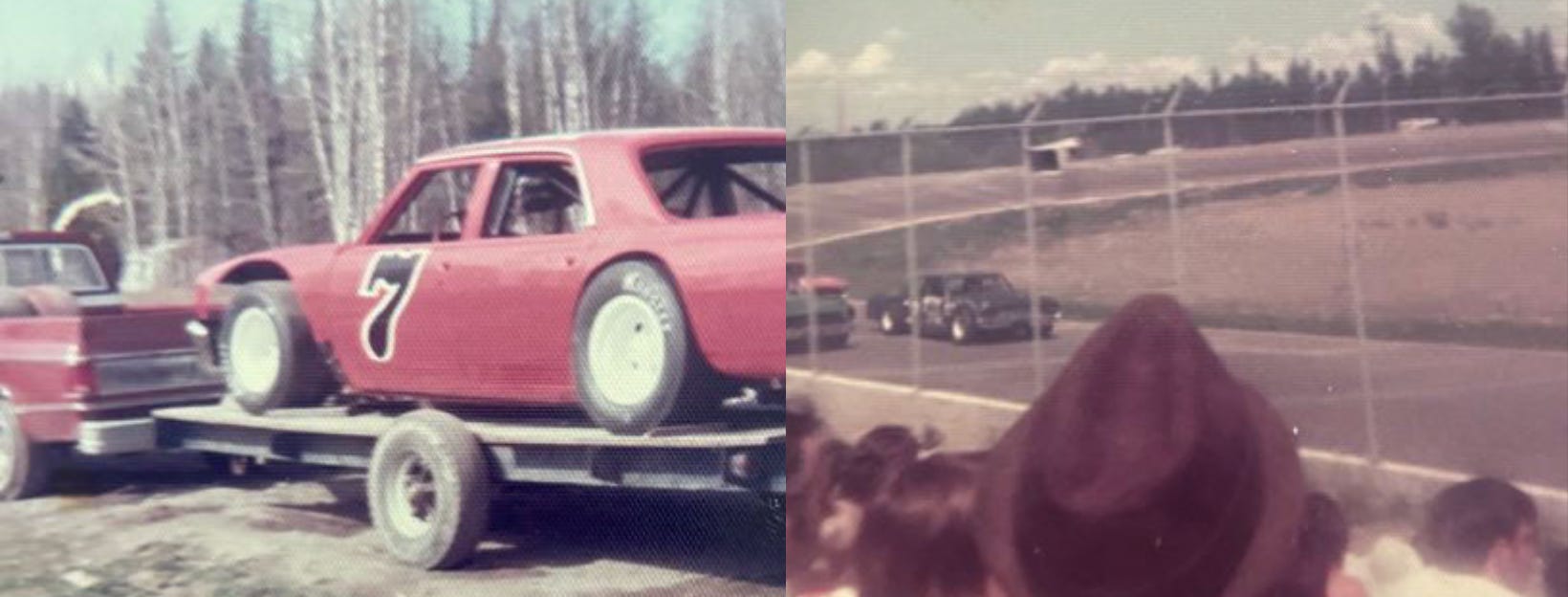
We were still 45 minutes from the racetrack when a dark burgundy Chevy pickup truck pulling an open, single-axel race trailer caught and passed us. With a quick honk, my brother Donnie, wife Lynda, and crew chief Wayne all waved as they flew by. The red number 7 racecar sat tied down on the trailer, late but ready for the night’s race.
My mother, nervous and constantly anxious throughout her life, clutched her purse and tensed. The speed at which Donnie had passed us concerned her and through pursed lips she expressed her concern.
“GARSH! I wish he wouldn’t drive so fast on these roads! Be careful, Don.”
Mom had a slight accent whereby gosh became GARSH and washing was pronounced WARSHING.
"Jesus Christ," Dad said. "I swear he does his best driving trying to get to the goddamned track in time! He better get his ass in the saddle before he misses time ins."
I watched mom calm herself.
Looking back, it’s amazing what she did. It’s not hyperbole when I describe her as anxious, but that constant nervousness never prevented her from watching the children and eventually grandchildren take part in various sports—even dangerous ones like racing. After suffering with severe anxiety myself, I can’t imagine what that was like for her. I think the prideful joy she found in her family outweighed her considerable fear.
It’s something I respect her for today.
After arriving at the track, parking, and finding a good seat in the grandstands along the front straight, I settled in between mom and dad, excited for qualifying. Donnie’s class, Superstocks, would time in last, and with the bigger motor tonight, we all expected him to qualify well. Mom handed me my notebook and pencil as I readied myself to record the times called out by the track’s public address announcer.
One by one, cars in all classes ran their individual qualifying laps. One warm up lap, followed by two timed laps—the fastest being counted. These times would determine the starting positions for the night’s races. 4 lap dashes for the fastest times, maybe 12 lap heat races, and then a main event—usually for Superstocks 30-35 laps.
Unlike Quesnel and Williams Lake, where cars pitted in the middle, PGARA’s pits were behind the backstretch, hidden from the spectators. As the many Superstocks started qualifying, I recorded the times the best I could. While other kids in attendance ran wild, oblivious to what happened on the track, I remained diligent, waiting for Donnie’s red number seven to appear from the pits.
Dad saw it first, tapping my leg and pointing.
“Here we go. Come on Don, pour it on!”
As he brought the car up to speed, passing the quickly filling grandstands for the first time, I noticed Dad tilt his head. He listened as the engine reached full power. I studied his face, wondering what he heard. I tapped him back.
"What's wrong?"
"Don't sound like the 350," he said. "Sounds like the 283 to me."
He was right. Word later reached us they couldn't get the new motor running properly. To make the race, a last-minute change back to the 283 was the reason they were late. He would once again be the underdog, relying on his steady driving to give himself a chance.
But, as I would learn from my dad and brothers, sometimes being the underdog isn't so bad.
We do our best with what we got.
To be continued… look for Part Two of Racing Through Life coming next week.
Thank you to our subscribers!
Now more than ever, we humbly ask those who enjoy our work to consider becoming a paid subscriber or by making a one time contribution. Anything would go a long way to lessen the burden we’re currently facing.
Regardless, we are happy for your valued readership. Please share this newsletter with someone you think would be interested.